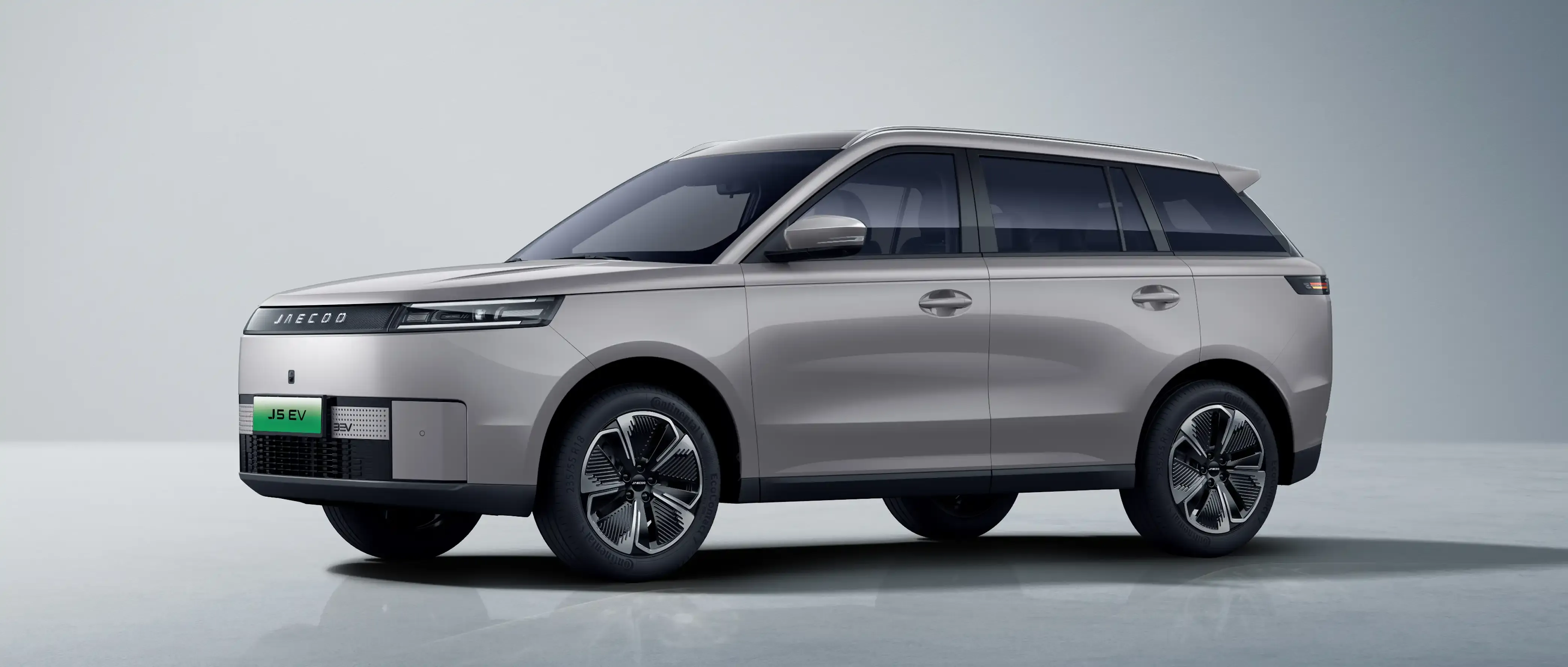
Jetour T2 vs Mahindra Thar Roxx vs Maruti Jimny: Off-Road Dimension & Capability Comparison
These three cars are grouped together constantly and share almost nothing. One is a lifestyle SUV with genuine hardware, one is a compact ladder-frame specialist, and one is a monocoque adventure SUV that plays the game differently.
Off-road capability in a brochure is mostly four numbers: ground clearance, approach angle, departure angle and breakover angle. They are useful, and they are also routinely misread — a car with a spectacular approach angle and a long wheelbase will beach itself on a crest that a worse-angled but shorter car walks over.
This comparison puts the numbers side by side and then explains which of them will actually stop you on the kind of terrain most Indian owners meet: a broken hill road, a riverbed approach, a monsoon-rutted village track.
The dimensional picture
The Jimny is the outlier by a wide margin, and its numbers explain why it embarrasses far more expensive cars off-road. At 3,985 mm long with a 2,590 mm wheelbase it has extremely short overhangs, which is what produces its class-leading angles. It is also narrow — 1,645 mm — which matters enormously on a single-track hill road where the alternative is reversing half a kilometre.
The Thar Roxx is the middle path: a proper ladder-frame chassis with a low-range transfer case and mechanical locking, in a body large enough to be a family car. Its 2,850 mm wheelbase is the longest here, which costs it breakover angle on sharp crests but buys it noticeably better composure on fast broken surfaces.
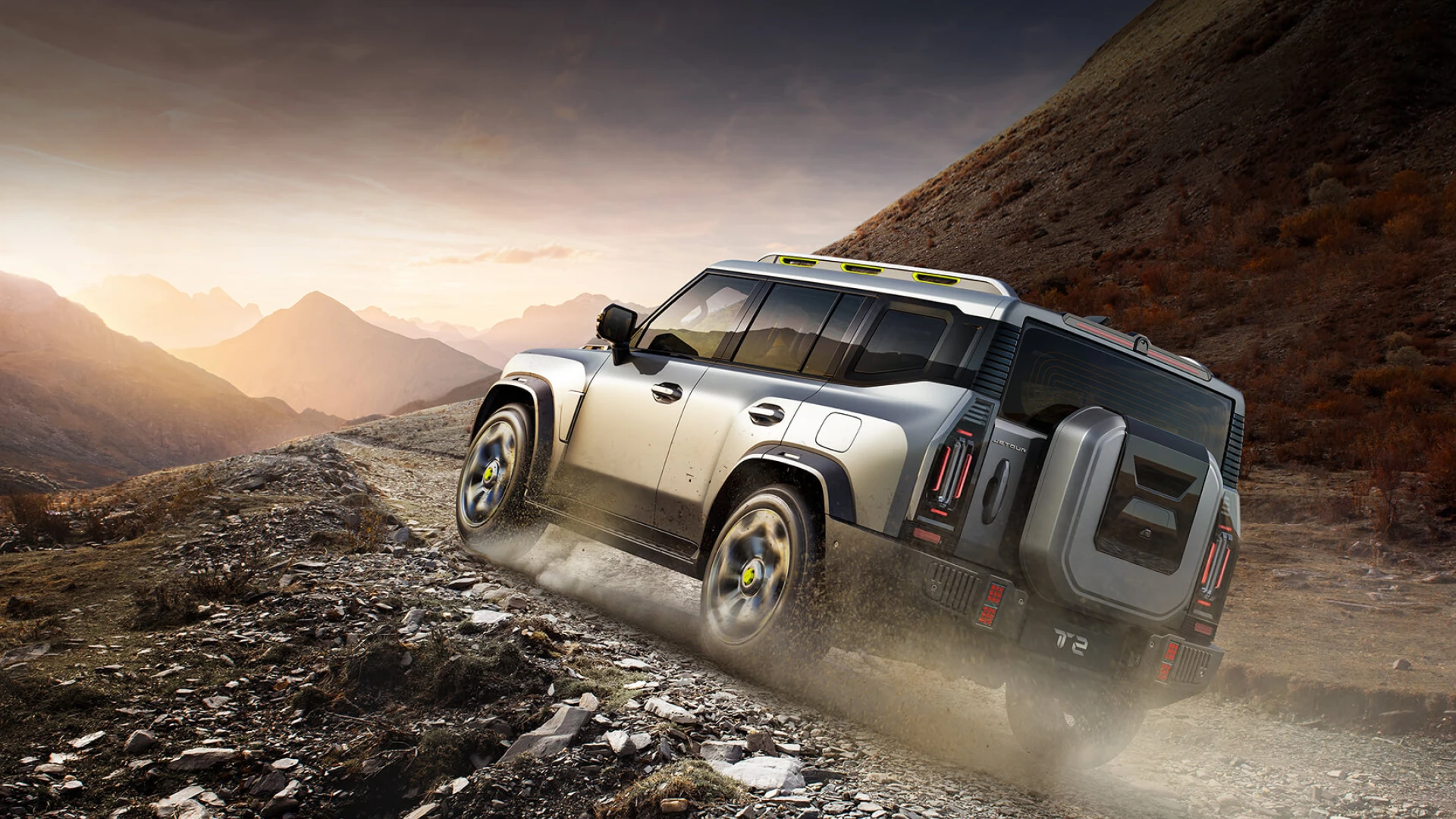
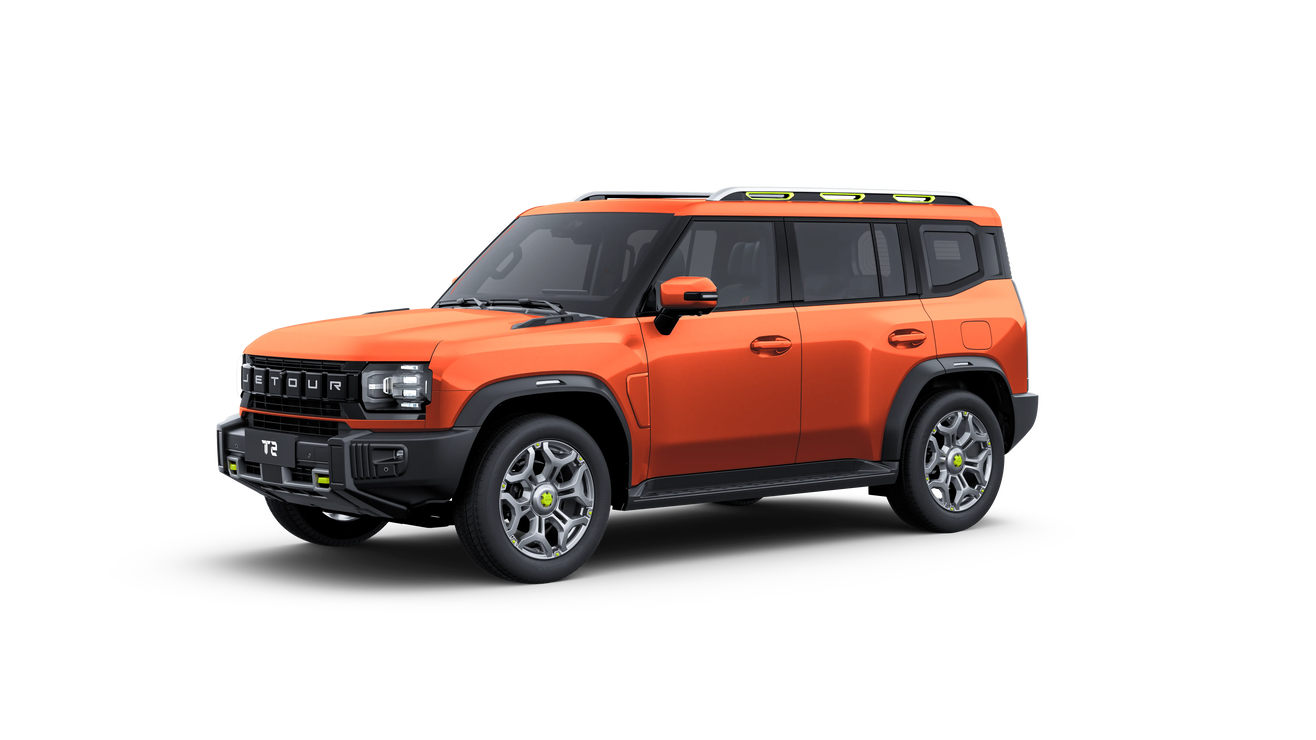
The T2 is the philosophical odd one out. It is a monocoque with 220 mm of clearance and an automatic on-demand all-wheel-drive system rather than a driver-selected low-range transfer case. That is a deliberate positioning choice, and it defines both what it does well and what it will not do.
| Jetour T2 | Mahindra Thar Roxx | Maruti Jimny | |
|---|---|---|---|
| Length | 4,785 mm | 4,428 mm | 3,985 mm |
| Width | 2,006 mm (mirrors out) | 1,870 mm | 1,645 mm |
| Height | 1,880 mm | 1,923 mm | 1,720 mm |
| Wheelbase | 2,800 mm | 2,850 mm | 2,590 mm |
| Min. ground clearance | 220 mm | ~207 mm (unladen) | 210 mm |
| Construction | Monocoque | Ladder frame | Ladder frame |
| Drivetrain | Automatic XWD (on-demand) | 4WD with low range (4x4 trims) | AllGrip Pro with low range |
Monocoque versus ladder frame: what it actually changes
Ladder-frame construction gives you a separate chassis under the body. The advantages are real on genuinely difficult terrain: the frame absorbs twist, recovery points can be attached to something structural, and the body is less prone to the panel-gap and door-seal problems that repeated flex causes. The disadvantages are equally real on the 95% of driving that happens on tarmac — more mass, a higher centre of gravity, and a ride that never quite settles.
A monocoque with a well-sorted all-wheel-drive system will handle bad roads, forest tracks, wet grass, sand at moderate speed and steep loose gravel perfectly well. What it will not do comfortably is slow-speed technical rock crawling, deep rutted articulation, or repeated recovery work — the things a low-range transfer case and a locking differential exist for.
So the honest framing is not 'which is more capable' but 'capable at what'. For a buyer whose off-road use is a Himalayan road trip, a beach approach and monsoon-season potholes, the monocoque car is the better daily companion. For a buyer who actually goes looking for obstacles, it is not the right tool.
Traction hardware compared
The Jimny's AllGrip Pro is a traditional part-time four-wheel-drive system with a genuine low range. It has no centre differential, so four-wheel drive is for loose surfaces only, and it relies on brake-based traction control rather than mechanical lockers. Combined with very low weight, that combination is remarkably effective.
The Thar Roxx's 4x4 offers low range plus mechanical locking on the appropriate trims, which is the most capable hardware in this group in absolute terms, and it is paired with enough torque to make the low range genuinely useful rather than a rescue-only mode.
The T2's XWD is an on-demand system that shifts between two- and four-wheel drive automatically, with selectable terrain modes — including snow, sediment and rock settings on the higher-output version. It is fast-acting and requires nothing of the driver, which is exactly the point. It cannot substitute for a low range when you need mechanical torque multiplication at walking pace.
Water wading, the number Indian buyers should care most about
Approach angles rarely end an Indian journey. Flooded underpasses and swollen crossings do. Wading depth is quoted less consistently than any other figure, and it depends on air intake height, electrical sealing and, in EVs and hybrids, battery enclosure sealing.
The ladder-frame cars here have the advantage of engineering heritage on this point — both have been developed with genuine wading in mind and both have owner communities that have tested the claims to destruction. For any monocoque SUV, verify the manufacturer's stated wading depth rather than assuming ground clearance implies it.
Whatever the number, the practical rule does not change: walk it first if you can, go slowly enough to keep a bow wave in front of the bumper, keep the revs steady, and never stop mid-crossing.
Living with each one
- Jimny — unbeatable on narrow, technical, low-speed terrain. Cramped for four adults, small boot, and tiring above 100 km/h. Buy it if the off-road bit is the point of the car.
- Thar Roxx — the most complete compromise. Real hardware, usable rear doors, family-viable. Still a ladder-frame vehicle, so it will never ride like a crossover, and fuel consumption reflects the mass.
- Jetour T2 — the most comfortable of the three on road by a clear margin, with the most equipment and the largest cabin, and enough clearance and traction for hard-pack trails and bad hill roads. Not a rock crawler and not sold as one.
Which one, honestly
Be truthful about the proportion of your driving that is genuinely off-road. For most buyers it is under 2%, and the correct choice is the car that is best for the other 98% while still being able to handle the 2% without drama. On that basis the T2's positioning is well judged.
If you are in the minority who actually needs articulation and low-range torque — you go green-laning, you tow off surfaces, you drive to places that need a spotter — then buy a ladder-frame car, and buy the one that fits your roads. In the Himalayas the Jimny's width is worth more than any other specification in this article.